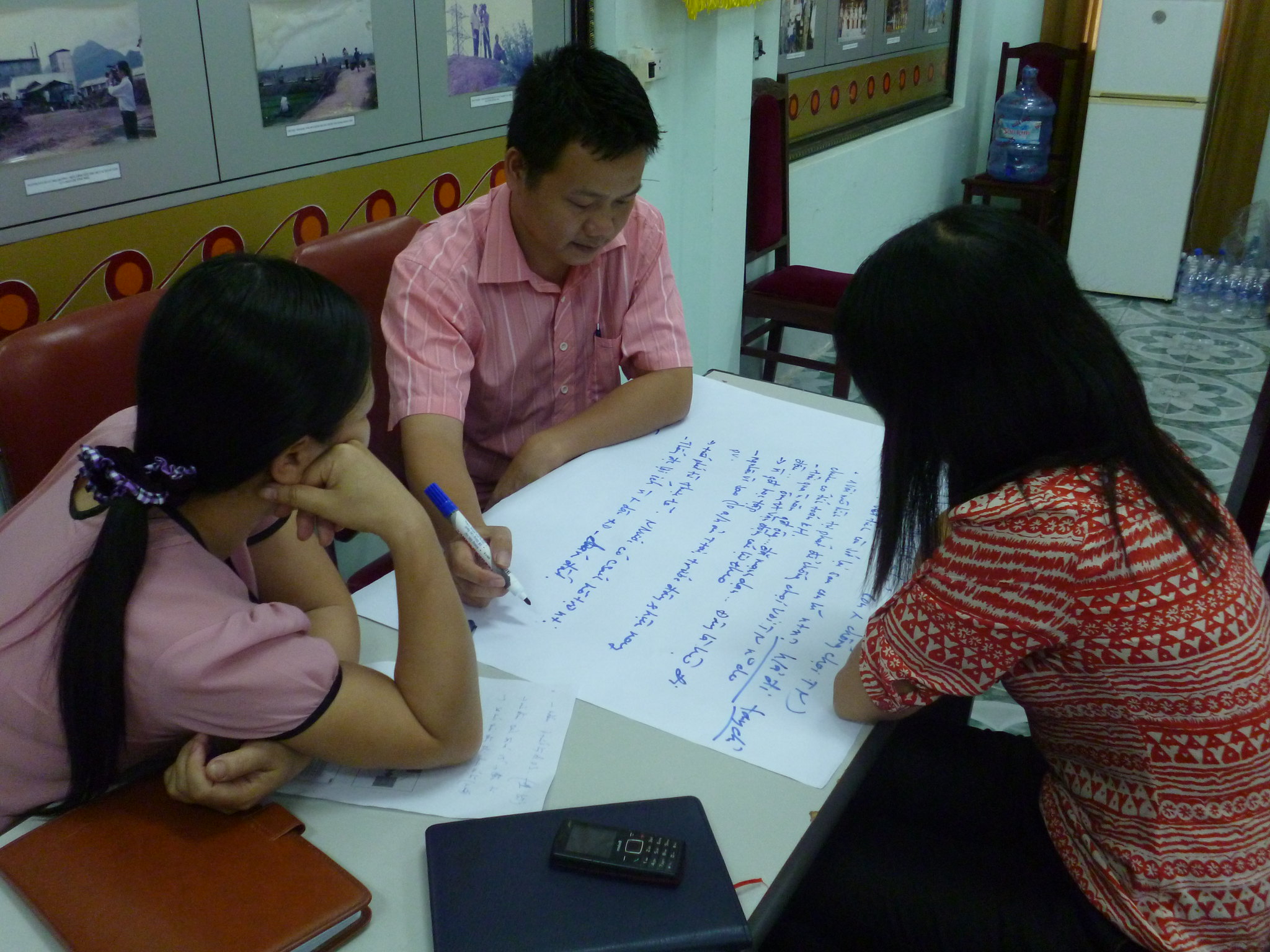
Those invited to help the media overseas need to ensure that the training they offer is continually refreshed in order to stay relevant and useful.
It takes more time and costs more to produce, but media training must be continually reworked and customised so that it is sensitive to local issues and better addresses local needs.
And trainers working in transition and post-conflict countries and areas where freedom of expression is under threat need to understand that they may have as much to learn as they have to give. If we get it wrong we could do more damage than good.
Address the real need
- Assessments of training needs carried out by media development organisations sometimes examine only superficial technical flaws in media production and delivery.
- Such an approach deals only with the cosmetic and may miss the point.
- Training offered to address perceived shortcomings in what appears on screen, on air or in print may simply make bad journalism look prettier.
Always insist on including your own ‘discovery’ time so that you are able to assess the training needs yourself rather than simply accepting the assessment of someone else.
The lazy option
- Off-the-peg training modules, dusted down and delivered like a mass market product, won’t work.
- Only bespoke, tailor-made training is fit for purpose.
- To fashion appropriate training, those offering it need to listen, observe and learn; it is a two-way process.
- Trainers need to understand the pressures under which the journalists in the host country live.
Every element of training needs to be adapted for the culture in which you are working. It’s insulting to those receiving training to offer them tired and worn material.
Continual updating
- Reassess your training modules after every trip.
- Don’t serve up the same material for each client.
- The arrogant option is to feel that you can land in any country and offer a set of tired and worn training modules that may well have been tried and tested in other territories, but have absolutely no local relevance.
- There will alway be different needs and subtle changes in emphasis required. Learn from each visit and be prepared to ditch everything and start again.
- Solutions that worked well 10 years ago in New York, Paris or London may not work today in Jakarta. Training offered in Jakarta last month will not be appropriate for Hanoi next week.
I have rarely come across a case where training that worked well in one country works well in another. In every case the presentations and exercises need to be revised.
Respect those you are trying to help
- Those sitting in front of you will probably be working in journalism 10 hours a day and seven days a week. They will be experiencing pressures you may never have come across.
- Spend time in the newsroom with local journalists in order to understand the pressures under which they work.
- Realise that those sitting in front of you may well be ahead of you in terms of experience and might be too polite to tell you.
- Take time to understand and, if necessary, return to your hotel, rip up your script and start again.
Don’t embarrass your audience or yourself by looking down on those attending your training and failing to acknowledge their achievements. Find out about those you are training before you start.
Keep an open mind
- Don’t rubbish or trivialise what those you are trying to help do before you understand why they do it.
- If a newspaper in South East Asia decides to update its Facebook page before a story has been published in print and online it may be because the journalists know that their Facebook following is 10 times that of its print run and online following combined.
It is essential to understand local culture, audience behaviour and expectations, and local business competition if you are to deliver training that is relevant and helpful.
Be prepared to be totally humbled
- Realise you don’t know best, you may have just been dealt a better hand.
- In the West, many journalists are taken out by the rich and powerful and wined and dined. In some of the countries in which you’ll be working, the journalists are taken out by the rich and powerful with bullets and bombs.
- Accept that at first you may have little in common with those you are trying to help. Your daily rate may be five times what those you are working with earn in a month.
- If they turn up late and leave early it may not be because they are lazy, it may be that they are doing three jobs to make ends meet.
- Don’t talk down to people before you know the facts. Respect that those sitting in front of you have probably paid a much greater price for media freedom than you will ever pay – or would be prepared to pay if it came to the push.
- Don’t underestimate the sacrifice people make for the vocation of being a journalist. It is rarely for self advancement or material gain, and it is almost always at personal cost and continuing personal risk.
You will have to earn respect, and to do that you need to respect those you are training. Unless you view them as colleagues you run the risk of alienating them and creating an uncomfortable atmosphere that is not conducive to successful teaching.
Be sure you know who sent you and why?
- Training programmes supported by foreign funders responding to politically-focused calls for proposals may do the receiving media organisation no good at all.
- They may even set them back rather than move them forward, and they will rarely address their needs.
- I know of a case in which the editor of a media organisation in a transition country told his staff to turn up for the first session because the training brought with it funding for equipment. As a result, the bewildered trainer was left staring at empty chairs after the first coffee break. But the box was ticked.
- Soon after, the donor departed to the next area where those pulling the strings felt that their influence was needed.
You will have been hired to do a job. You need to understand the real reasons behind why you are being asked to deliver training. On the face of it the purpose is to build local capacity. But always ask why before you accept.
Always ask what happens next
- Media development is a business. The organisations offering assistance have to cover core costs and pay the bills out of the funds raised.
- They are in competition with one another. They are pitching for tenders, writing proposals and constantly striving to drum up work.
- Be sure to ask whether there are sufficient funds to finish the job. Beware of media training that appears to lack any provision for follow-up. One-off intervention serves little purpose.
- In one case I was told by a media development organisation that what happens next was “not my concern” because the project (as set out in the project proposal) was complete. I had been paid and therefore, presumably, I should no longer care.
- That experience was part of the inspiration for the setting up of this site, Media Helping Media, but that’s another story.
The training you are being asked to deliver will probably have been planned in an office in a city in the West. It will be part of a strategy for media development which is then put to a funder. The funders that respond will want a return on their investment. What are their expectations? What are the politics of the situation? Make sure you are comfortable with who is paying your fees and why.
Achieve buy-in from the top
- Ensure that there is full buy-in from the media organisation concerned before you get on the plane.
- Insist on communication with senior managers in the host media company before any training takes place.
- Talk through what is needed. Find out about their target audience. Try to understand the market conditions and the political pressures.
- See what they want to achieve and how far they are prepared to go.
There is nothing worse than offering training that may inspire the journalists on the newsroom floor and out in the field only to find that they are not allowed to implement what they learnt after you leave. That leads only to disillusionment and resentment.
Ensure that you do no harm
- Make sure that whatever you do will not endanger those with whom you are working.
- Operate on the basis that in some countries there will be those in the audience who are reporting back to their political masters.
- They may also be on the lookout for those who respond to your training in a way that they may consider to be a threat.
- This is particularly important when training people about editorial ethics.
- Objectivity and impartiality sound good in the West, but seeking to achieve both could result in a journalist being reprimanded.
You need to have a long-term strategy. Do not push them too far at first. Let them decide what is possible and what is appropriate, and be there to support them in what they feel will work for their country and their people.
Get the basics right
- Don’t push investigative journalism
- programmes in an immature and still developing media market – especially in a transition country – until they have got the basics right.
- Share your experience in uncovering sourced, verified and attributed facts and presenting those in a way that informs the public debate.
- Investigative journalism for some will mean getting revenge on those they see as the bad guys prior to transition.
That will inflame the situation. Start with the journalism basics and offer investigative journalism training only when the media landscape has matured.
Be discerning in choosing who to work with
- Get involved only in projects focused on building local capacity and which aim to transfer skills and empower local journalists.
- Give priority to projects that aim establish sustainable media training delivered by locals who have become trainers of trainers.
- Have a clear exit strategy before you apply for your visa.
- Make sure that it is about making those you work with great and able to develop without an ongoing dependency on you or those who sent you.
Always try to identify the media leaders of today and the media leaders of the future and work with both. And always say thanks for those who let you work in their country.